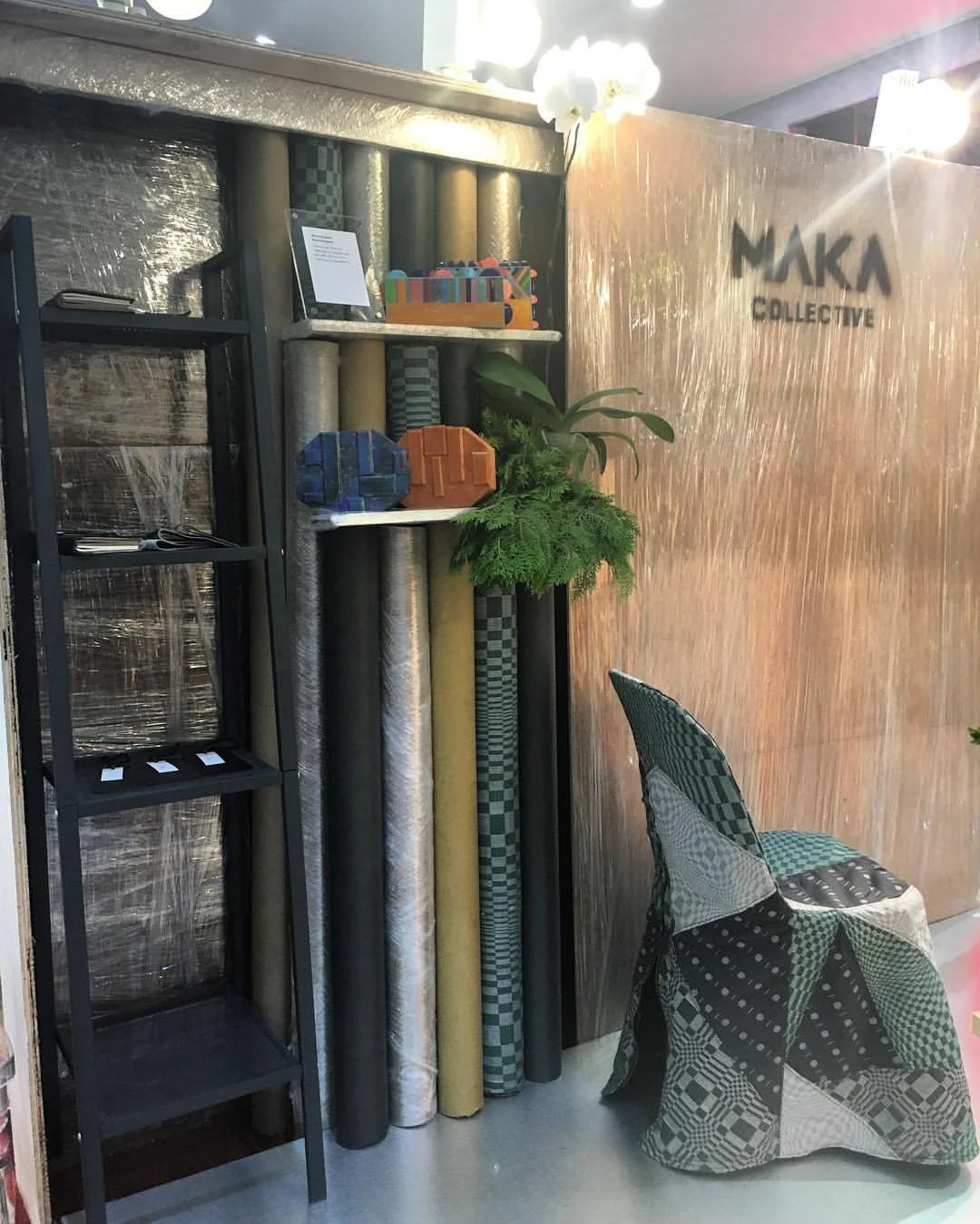
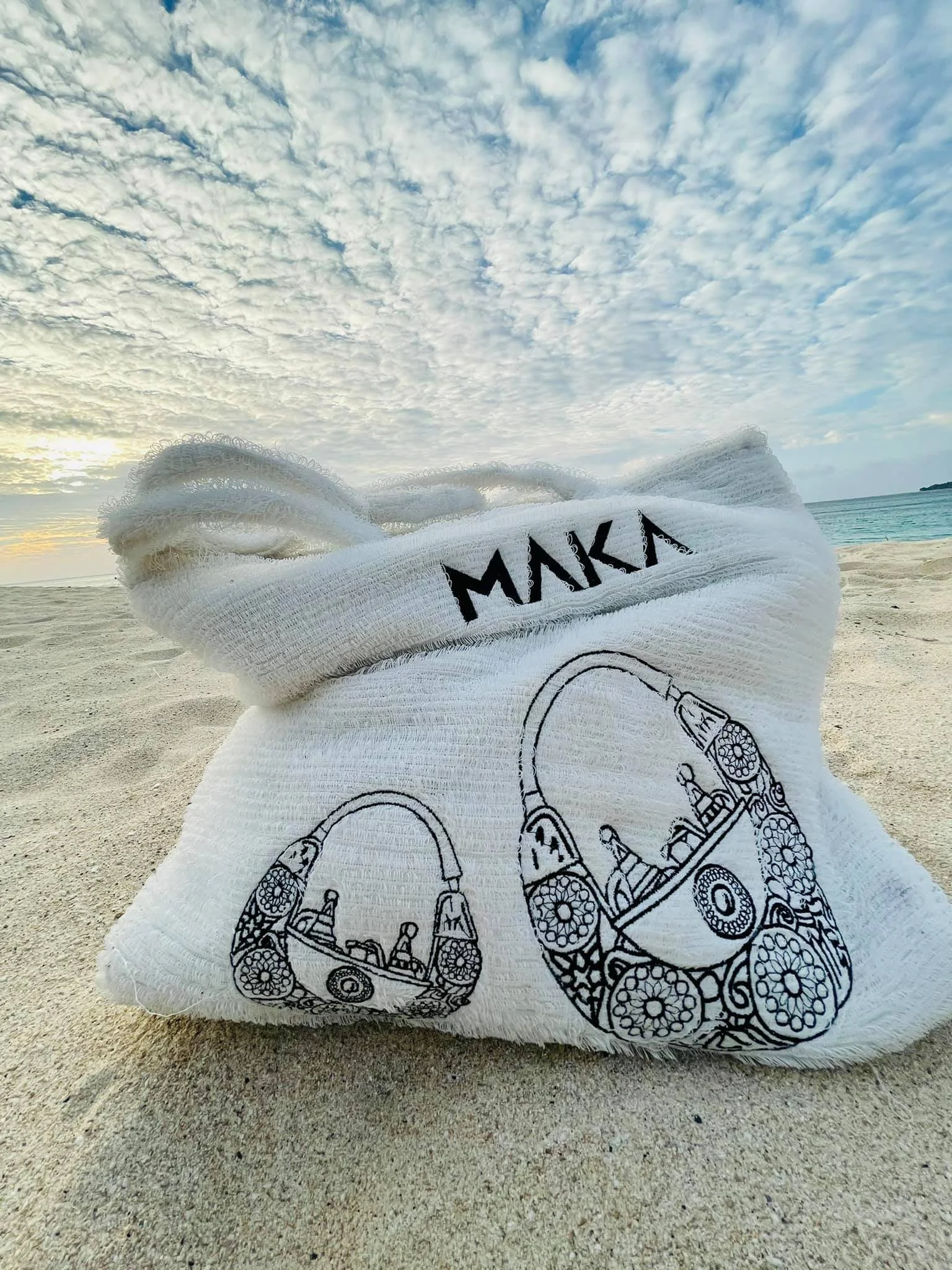
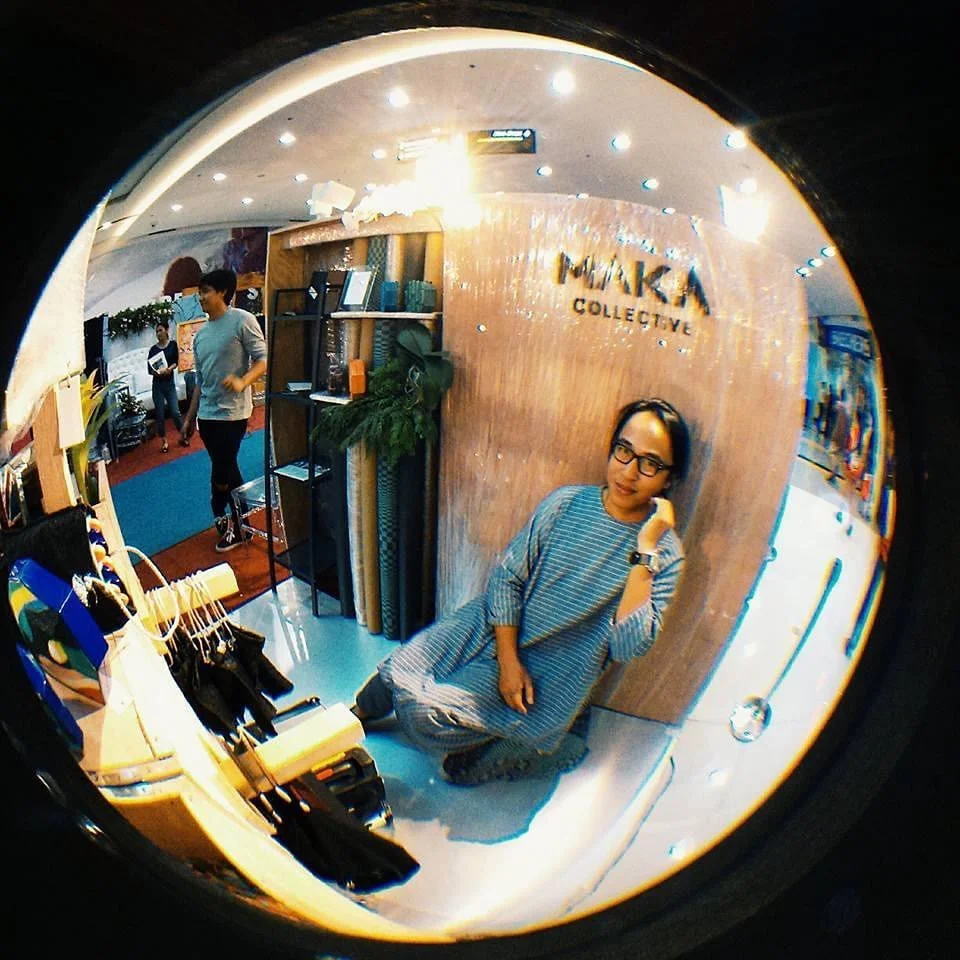
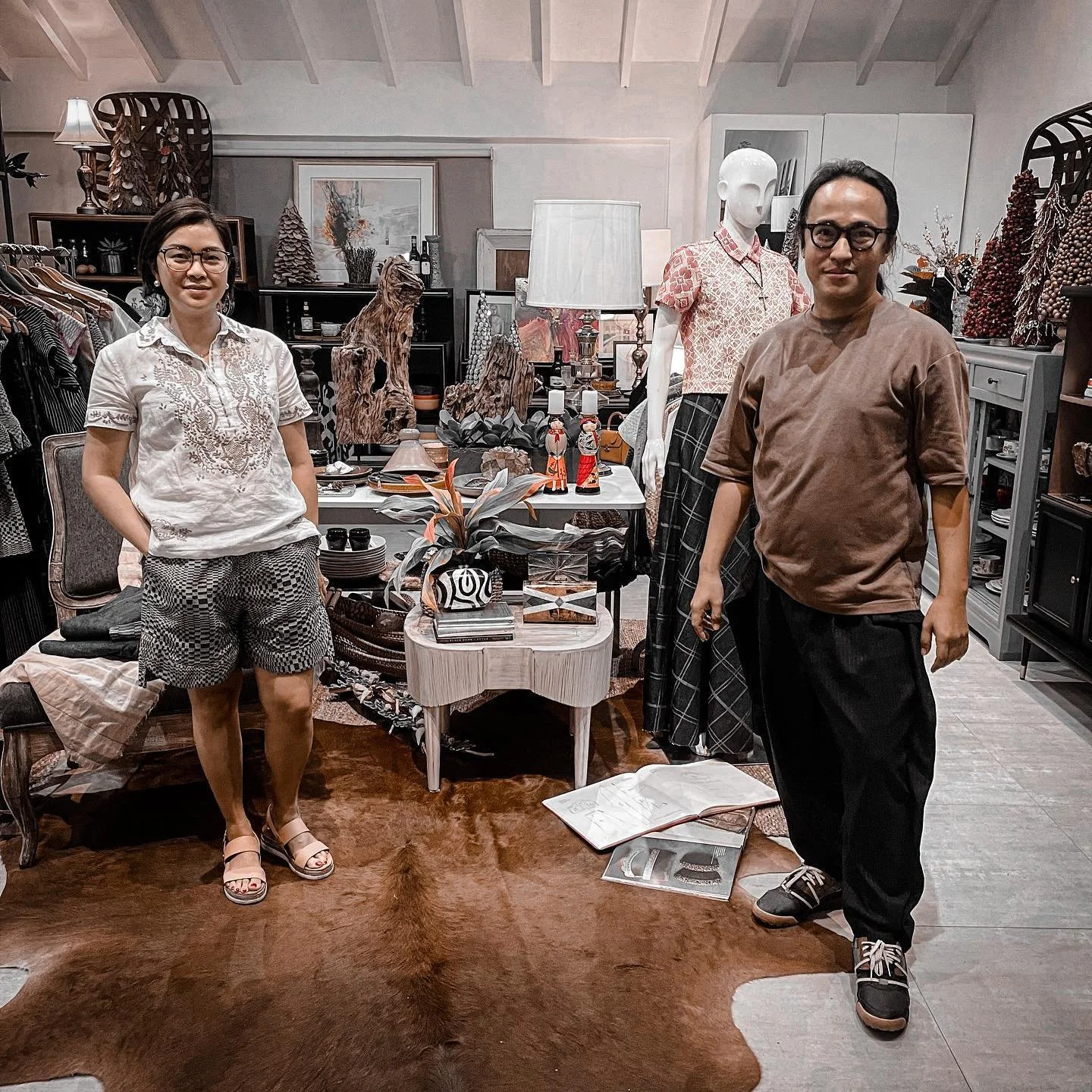
The label was founded by Aian Raquel, running in parallel to his work as experiential and exhibition designer, and built around a close creative partnership with in-house designer Joash Fabros Bugaoisan. Joash brings an unusual formation to the work — an engineering graduate turned educator, trained under Gino Gonzales at Costume Lab at the Cultural Center of the Philippines, and deeply grounded in the history of Philippine dress from its traditional forms through the evolution of the terno. Behind every piece is a wider network of freelance makers and weaving communities whose hands and knowledge are as much a part of the work as the design itself.
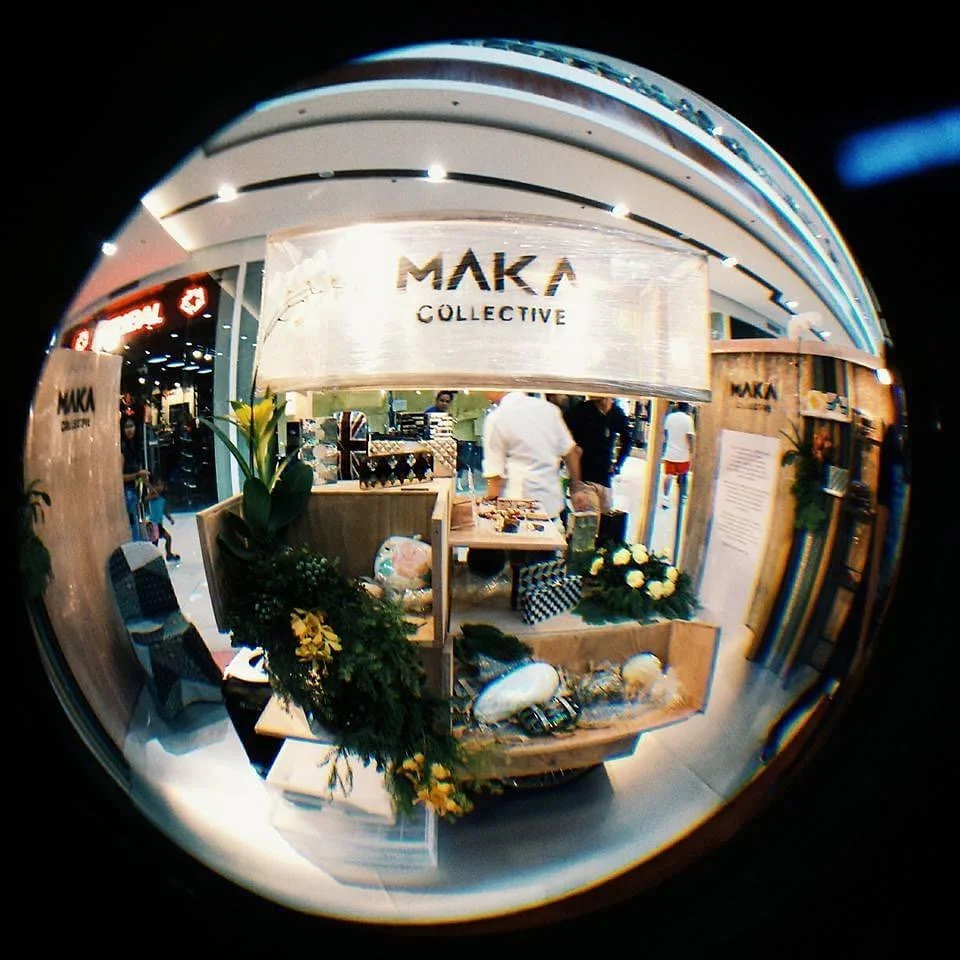
MAKA's first physical pop-up in 2016 offered something unexpected: handmade minaudières crafted from natural shells and antique jewelry — objects that already carried history in their material. It was an early signal of what the label would always be drawn to: things made by hand, made with intention, made from something that came before. When the pandemic later slowed the world down, that foundation held. A growing local audience turned its attention to what was made close to home, and the label built a following among those who understood the value of heritage craft. A partnership with Red Dot Collective, the successful retail brand under Mary Ann Cua Macaraeg, gave MAKA a platform and a community.
Alongside its collections, MAKA has developed a quiet but meaningful practice in bespoke work: bridal projects, special celebrations, and custom orders developed in close collaboration with each client. These commissions are MAKA at its most personal: cloth chosen with intention, made to mark a moment that matters.
The Kalgaw series — summer in Ilocano — remains the label's signature showcase for material innovation, most recently in Kalgaw 3, presented at the KatHABI Fashion Innovation Show in collaboration with DOST-PTRI, working across bamboo-poly, silk, piña, cotton, and handwoven inabel.
MAKA operates quietly but deliberately — less as a fashion house, more as a cultural project with a garment at its center.
The Name
Maka- is a prefix in Tagalog and Ilocano, carrying two senses depending on what it attaches to.
The first is the affiliative: "pro-," "in favor of," "oriented toward." The maka- of makabayan (patriotic), makatao(humanitarian), makakalikasan (pro-environment). A way of declaring where one stands.
The second is the abilitative — capability, possibility, "able to." Attached to a verb, it forms words like makakita (to see), makakain (to eat), makasao in Ilocano (to speak). The prefix that opens a thing into being possible.
Both meanings apply to what we do. To take a side with the material, and to make something with it.
MAKA Collective was founded on a simple conviction: that the handwoven textiles of the Philippines — inabel, piña, and other traditional fabrics — belong not only in cultural memory, but in contemporary life.